Kailash Mansarovar Yatra – The Ultimate Spiritual Journey to Mount Kailash
Introduction to Kailash Mansarovar Yatra
The Kailash Mansarovar Yatra is considered one of the most
sacred and spiritually transformative pilgrimages in the world. Nestled in
the remote western region of Tibet, Mount Kailash and Lake Mansarovar
attract thousands of devotees, spiritual seekers, and adventurers every year.
Revered by followers of Hinduism, Buddhism, Jainism, and Bon, this
divine destination symbolizes purity, enlightenment, and liberation.
We embark on the Kailash Mansarovar Yatra not merely as
a physical journey but as a profound spiritual awakening. Surrounded by
majestic Himalayan landscapes, pristine lakes, and ancient spiritual energy,
this pilgrimage allows us to experience the true essence of devotion and inner
peace.
Why Kailash Mansarovar Yatra is Considered the
Most Sacred Pilgrimage
The sacred Mount Kailash is believed to be the abode
of Lord Shiva, one of the principal deities in Hinduism. According to
ancient scriptures, Lord Shiva resides on Mount Kailash in eternal
meditation with Goddess Parvati, radiating divine energy across the
universe.
For Buddhists, Mount Kailash represents the home of Demchok
(Chakrasamvara), symbolizing supreme bliss and enlightenment. In Jainism,
it is the place where Rishabhadeva, the first Tirthankara, attained
liberation. Followers of the Bon religion also consider the mountain the
spiritual center of the universe.
The Lake Mansarovar, located at an altitude of about 4,590
meters, is believed to have been created by the mind of Lord Brahma.
Pilgrims take a holy dip in the lake, believing it purifies sins accumulated
over many lifetimes.
Mount Kailash – The Center of Spiritual Energy
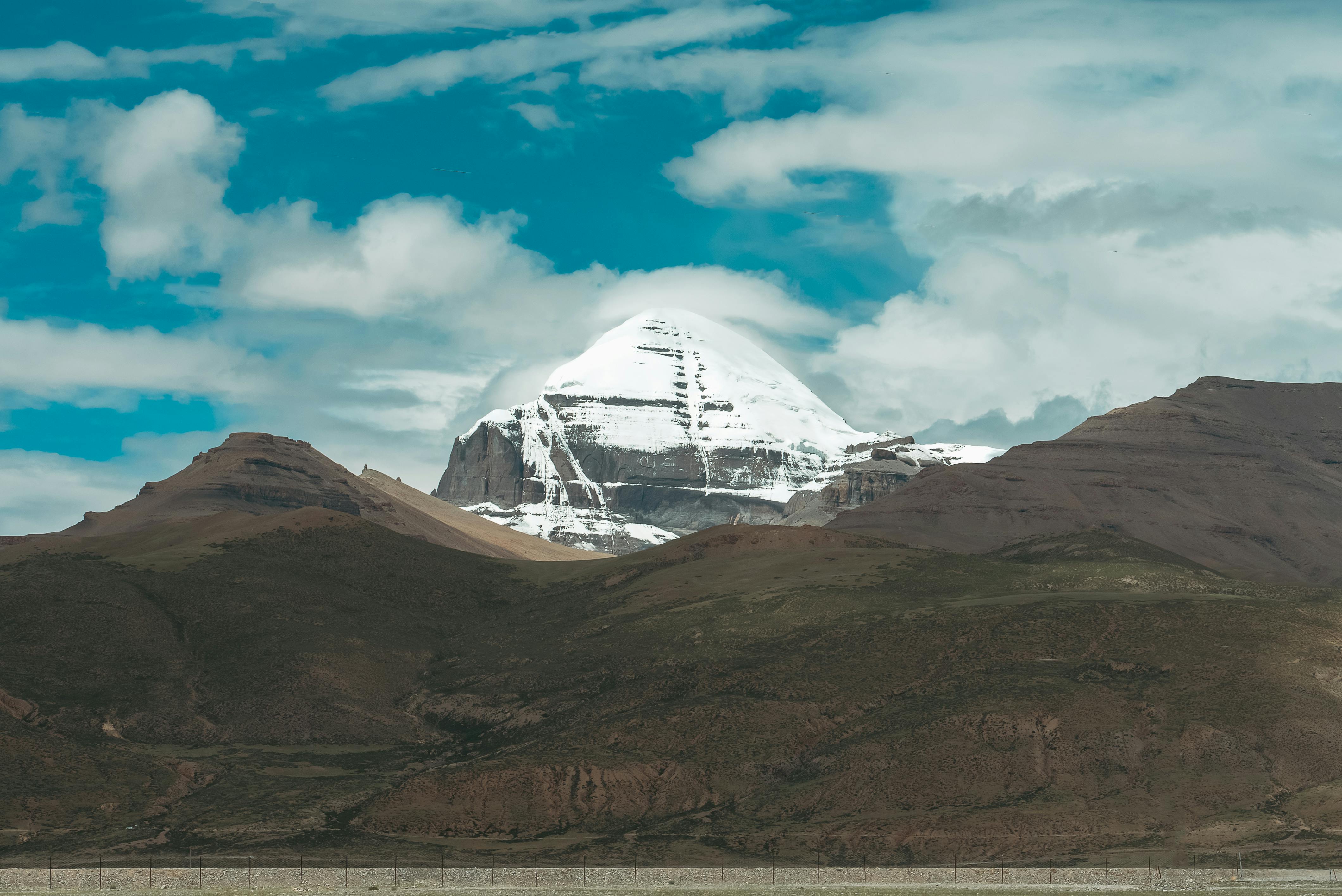
Standing at 6,638 meters above sea level, Mount
Kailash is not the tallest mountain in the Himalayas, yet it remains one of
the most mysterious and sacred peaks on Earth.
Unlike other Himalayan mountains, Mount Kailash has never
been climbed, as climbing the sacred mountain is prohibited out of deep
spiritual respect. Its perfectly symmetrical pyramid shape and unique
geological features have fascinated pilgrims and researchers alike for
centuries.
Many spiritual traditions believe that Mount Kailash is the
cosmic axis (Axis Mundi) connecting heaven and earth. The mountain is said
to radiate immense spiritual energy, making it a powerful place for meditation
and transformation.
Lake Mansarovar – The Sacred Lake of Purification
Lake Mansarovar is one of the highest
freshwater lakes in the world and is known for its crystal-clear turquoise
waters. Located near Mount Kailash, the lake reflects the majestic peak,
creating a breathtaking spiritual landscape.
Pilgrims perform rituals such as:
- Holy
bathing in the sacred waters
- Meditation
and prayers on the lakeshore
- Offering
prayers to Lord Shiva
- Collecting
sacred water as blessings
It is believed that a single dip in the waters of Lake
Mansarovar washes away sins and grants spiritual purification.
The Kailash Parikrama – Circumambulating the Holy
Mountain
The Kailash Parikrama (Kora) is the most important part
of the Kailash Mansarovar Yatra. Pilgrims walk around the sacred
mountain covering approximately 52 kilometers over three days.
Completing the Kailash Parikrama is believed to bring
immense spiritual merit and liberation from the cycle of rebirth.
Three-Day Kailash Parikrama Route
Day 1: Darchen to Dirapuk (20 km)
The journey begins from Darchen, the base camp of Mount Kailash.
Pilgrims walk through the beautiful Lha Chu Valley, surrounded by
towering cliffs and sacred landscapes.
Day 2: Dirapuk to Zuthulpuk via Dolma La Pass (22
km)
This is the most challenging and spiritually significant day of the
trek. Pilgrims cross the Dolma La Pass (5,630 meters), the highest point
of the parikrama. Nearby lies the sacred Gauri Kund, believed to be
blessed by Goddess Parvati.
Day 3: Zuthulpuk to Darchen (10 km)
The final day involves a relatively gentle trek back to Darchen, marking
the completion of the sacred parikrama.
Best Routes for Kailash Mansarovar Yatra
Several routes lead to the sacred Kailash Mansarovar Yatra,
but the most popular and comfortable route is via Nepal.
Kailash Mansarovar Yatra via Nepal
This route typically begins in Kathmandu, where
pilgrims visit important temples before entering Tibet.
Popular pilgrimage sites visited include:
- Pashupatinath
Temple
- Budhanilkantha
Temple
- Guhyeshwari
Temple
- Dakshinkali
Temple
After spiritual preparation in Kathmandu, pilgrims travel to
Tibet through the Kerung border and continue towards Saga, Lake
Mansarovar, and Mount Kailash.
Best Time for Kailash Mansarovar Yatra
The best months for the Kailash Mansarovar Yatra are
from May to September, when the weather conditions are relatively stable
and the Himalayan routes remain accessible.
Season Highlights
- May
– June: Pleasant weather and clear mountain views
- July
– August: Spiritual festivals and vibrant landscapes
- September:
Crystal-clear skies and fewer crowds
The Saga Dawa Festival, one of the most important
Tibetan Buddhist celebrations, also occurs during this period and attracts
pilgrims from around the world.
Physical Preparation for Kailash Mansarovar Yatra
The Kailash Mansarovar Yatra takes place in
high-altitude terrain, requiring proper physical preparation.
Pilgrims should focus on:
- Regular
walking or hiking practice
- Cardiovascular
fitness training
- Breathing
exercises and yoga
- Acclimatization
during the journey
Maintaining good physical health ensures a safe and fulfilling
pilgrimage experience.
Spiritual Significance of Completing Kailash
Mansarovar Yatra
Completing the Kailash Mansarovar Yatra is believed to
be a once-in-a-lifetime spiritual achievement. According to Hindu
scriptures, completing one Kailash Parikrama washes away sins of a
lifetime, while performing 108 circumambulations leads to ultimate
liberation.
Pilgrims often describe the journey as life-changing,
filled with moments of deep reflection, spiritual awakening, and divine
connection.
The silence of the Himalayan plateau, the reflection of Mount
Kailash in Lake Mansarovar, and the powerful spiritual atmosphere create an
experience unlike any other in the world.
Cultural and Natural Beauty of the Journey
The journey to Kailash Mansarovar passes through
breathtaking landscapes of the Himalayan region, including:
- Vast
Tibetan plateaus
- Snow-covered
mountain ranges
- Sacred
rivers and lakes
- Ancient
monasteries and Tibetan villages
Pilgrims witness a blend of spiritual heritage, Tibetan
culture, and untouched natural beauty, making the yatra both a sacred
pilgrimage and an unforgettable adventure.
Conclusion – A Journey Beyond the Physical World
The Kailash Mansarovar Yatra stands as one of the most
profound spiritual journeys on Earth. It is not merely a pilgrimage but a sacred
path toward inner transformation, faith, and enlightenment.
Walking in the shadow of Mount Kailash, meditating
beside the holy waters of Lake Mansarovar, and completing the sacred Kailash
Parikrama creates a powerful spiritual experience that remains etched in
the hearts of pilgrims forever.
For seekers of faith, spirituality, and adventure, the Kailash
Mansarovar Yatra is truly the ultimate Himalayan pilgrimage—a
journey where the divine and the natural world unite in perfect harmony.